Proportion of Knowledge, Attitude and Practice of Physical Exercise during Pregnancy among Antenatal Care Attendants at Dessie Town Health Institutions, South Wollo Zone, Amhara Region, Ethiopia. A Multicenter Descriptive Cross Sectional Study
Abdusellam Yimer*, Seada Endris, Alemtsehay Wossen, Bilal Mohammed, Ahmed Yesuf Ali, Yitagesu Sintayehu, Alemu Guta, Aminu Mohammed Yasin and Mengistu Abate
Department of Midwifery, College of Medicine and Health Sciences, Dire Dawa University, Dire Dawa, Ethiopia Department of Midwifery, College of Medicine and Health Sciences, Wollo University, Dessie, Ethiopia Department of Epidemiology and Biostatistics, Amazon Medium Clinic, Dessie, Amhara Region, Ethiopia Department of Midwifery, Akesta General Hospital, Akesta, Amhara Region, Ethiopia Department of Epidemiology and Biostatistics, School of Public Health, College of Medicine and Health Sciences, Wollo University, Dessie, Ethiopia
Published Date: 2025-04-14DOI10.36648/2471-9803.11.2.206
Abdusellam Yimer1*, Seada Endris2, Alemtsehay Wossen2, Bilal Mohammed3, Ahmed Yesuf Ali4, Yitagesu Sintayehu1, Alemu Guta1, Aminu Mohammed Yasin1 and Mengistu Abate5
1Department of Midwifery, College of Medicine and Health Sciences, Dire Dawa University, Dire Dawa, Ethiopia
2Department of Midwifery, College of Medicine and Health Sciences, Wollo University, Wollo, Ethiopia
3Department of Epidemiology and Biostatistics, Amazon Medium Clinic, Dessie, Amhara Region, Ethiopia
4Department of Midwifery, Akesta General Hospital, Akesta, Amhara Region, Ethiopia
5Department of Epidemiology and Biostatistics, School of Public Health, College of Medicine and Health Sciences, Wollo University, Dessie, Ethiopia
- *Corresponding Author:
- Abdusellam Yimer
Department of Midwifery, College of Medicine and Health Sciences, Dire Dawa University, Dire Dawa, Ethiopia
E-mail:yimerabduselam@gmail.com
Received date: July 18, 2024, Manuscript No. IPCCO-24-19411; Editor assigned date: July 20, 2024, PreQC No. IPCCO-24-19411 (PQ); Reviewed date: August 03, 2024, QC No. IPCCO-24-19411; Revised date: April 07, 2025, Manuscript No. IPCCO-24-19411 (R); Published date: April 14, 2025, DOI: 10.36648/2471-9803.11.2.206
Citation: Yimer A, Endris S, Wossen A, Abate M, Mohammed B, et al. (2025) Proportion of Knowledge, Attitude and Practice of Physical Exercise during Pregnancy among Antenatal Care Attendants at Dessie Town Health Institutions, South Wollo Zone, Amhara Region, Ethiopia. A Multicenter Descriptive Cross Sectional Study. Crit Care Obst Gyne Vol:11 No:2
Abstract
Introduction: Physical exercise consist of planned, repetitive and intentional movements that reduces the risk of pregnancy related complications. Worldwide, there was a high rate of physical inactivity during pregnancy including Ethiopia, which had detrimental effects on both pregnant women and their developing fetus. In this study area, no studies has been conducted on pregnant women’s knowledge, attitude and practice towards physical exercise during pregnancy.
Objectives: This study aims to assess proportion of pregnant women’s knowledge, attitude and practice towards physical exercise during pregnancy among antenatal care attendants at Dessie town health institutions, south Wollo zone, Amhara region, Ethiopia, 2023.
Method: Institutional based cross-sectional study was conducted among 614 pregnant women receiving antenatal care service from 18th January to 25th February 2023. A systematic random sampling technique was used to select study participants. Data were collected using a pretested, face to face interviewer-administered and semi-structured questionnaire. Then, the data were cleaned, coded and entered into EPIDATA version 4.6 and analyzed using SPSS version 25. Descriptive statistics were done using frequency, percentage and mean of the variables. Finally, the finding presented using text, tables and figures.
Results: The response rate of this study was 98%. The proportion of good knowledge, favorable attitude and currently practiced physical exercise during pregnancy were 56.3%, 51.5% and 32.2% respectively.
Conclusion: The findings of this study indicated that approximately half of the participants had good knowledge and favorable attitude. However, almost one-third of the participants practiced physical exercise during their pregnancy. It is recommended that antenatal care providers offer health education and counseling about the benefits of physical exercise during pregnancy.
Keywords
Knowledge; Attitude; Practice; Physical exercise; Pregnant women; Dessie; Ethiopia
Abbreviations
ACOG: American College of Obstetrics and Gynecology; ACSM: American College of Sports Medicine; ANC: Antenatal Care; AOR: Adjusted Odds Ratio; EDHS: Ethiopia Demographic and Health Survey; I-CVI: Item Content Validity Index; IRERC: Institutional Research Ethical Review Committee; MMR: Maternal Mortality Ratio; NGO: Non-Governmental Organization; PEx: Physical Exercise; SDGs: Sustainable Development Goals; UNFPA: United Nations Population Fund Agency; SSA: Sub-Saharan Africa; WHO: World Health Organization; VIF: Variance Inflation Factor
Introduction
Physical activity encompasses all bodily movements produced by the contraction and relaxation of skeletal muscles throughout life. Physical exercise is a subset of physical activity that characterized by planned, repetitive and intentional movements that provide numerous health benefits for individuals, including pregnant women and their fetuses [1].
One effective health intervention for preventing maternal morbidity and mortality comprehensive antenatal care. This care aim to ensure a positive pregnancy and birth experience by identifying risks, managing pregnancy-related complications and providing health education and promotion. One of the health promotion and preventive measure for pregnancy-related complications is physical exercise during pregnancy [2]. Physical exercise stands out as reliable, safe and beneficiary throughout pregnancy for both the pregnant women and fetuses, provided there are no obstetric or medical contraindications [3].
Engaging in Physical Exercise (PEx) during pregnancy enhances physical fitness, reduces gestational weight gain, lowers the risk of gestational diabetes, decreases cesarean section rates and mitigates issues such as hypertension, postpartum depression, instrumental deliveries, urinary incontinence, peripartum pain and macrosomia. It also alleviates lower back pain, shortens recovery time and positively impacts maternal mental health and quality of life [4].
Recommended exercises during pregnancy include walking, relaxation/breathing exercises, pelvic floor exercises, back care exercises, ankle and toe exercises, aerobic swimming and labor preparation exercises like squatting and pelvic tilts. According to the American College of Obstetrics and Gynecology (ACOG) committee opinion No. 804 and the American College of Sports Medicine (ACSM), light to moderate physical exercise during pregnancy is generally safe and beneficial for most women, though some modifications may be necessary due to physiological changes and fetal needs. Pregnant women should aim for at least 150 minutes of moderate-intensity exercise per week, spread over at least three days per week, with sessions lasting a minimum of 30 minutes each [5].
Maternal mortality remains a global health challenge. While the Maternal Mortality Ratio (MMR) was 211 per 100,000 live births worldwide in 2017, it was 542 per 100,000 live births in Sub-Saharan Africa (SSA) in 2017 [6]. Ethiopia, one of the countries in this region, reported an MMR of 401 per 100,000 live births in Ethiopia Demographic and Health Survey (EDHS) 2019. Globally, there is a rise in physical inactivity that has serious health repercussions implications including increased non-communicable diseases such as hypertensive disorder during pregnancy and gestational diabetes mellitus which are contributed for these maternal deaths. The United Nations has set a target within its sustainable development goals in 2015 to reduce the MMR to below 70 per 100,000 live births by 2030. To achieve this, the United Nations Population Fund (UNFPA) emphasizes the need for improved health promotion, reproductive health care and preventive services to avoid pregnancy-related complications [7].
Globally, the magnitude of pregnant women’s knowledge towards PEx during pregnancy varies from country to country. As evidence indicated that a study conducted in different countries revealed a magnitude of poor knowledge towards PEx during pregnancy ranging from 34% in India to 93% in Iraq. In Zambia, 81%, in Nigeria, 51% and in Ethiopia ranging from 44.6% in Arbaminch to 59.5% in Gonder of the pregnant women’s had poor knowledge towards PEx during pregnancy [8]. As study showed in the above-mentioned scholars around the world documented that most of the pregnant women’s had poor knowledge towards PEx during pregnancy.
Globally, the magnitude of pregnant women’s attitude towards PEx during pregnancy varies from country to country. As evidence indicated that a study conducted in different countries revealed a magnitude of unfavorable attitude towards PEx during pregnancy ranging from 6.2% in Brazil to 64.5% in Sirilanka (Colombo). In Zambia, 7%, in Nigeria, 15.6% and in Ethiopia ranging from 54% in Arbaminch to 72.1% in Addis Ababa had unfavorable attitude towards PEx during pregnancy. As study showed in the above-mentioned scholars around the world documented that most of the pregnant women had unfavorable attitude towards PEx during pregnancy.
According to World Health Organization (WHO) report in 2015, an estimated 3.2 million of the global deaths are caused by physical inactivity [9]. Less than 15% of pregnant women actually achieve the minimum recommended 150 minutes per week of moderate-intensity PEx during their pregnancy.
Researchers around the world have documented that the magnitude of practice of PEx during pregnancy in developing countries and to some extent in developed countries was low and does not meet ACOG requirements. A systematic review conducted in Africa found that the magnitude of practice of PEx during pregnancy was low [10]. The magnitude of practice of PEx during pregnancy in pregnant Ethiopian women was found to be low, ranging from 20.7% in Mekelle to 30.9% in Gonder.
Thousands of pregnant women died due to physical inactivity during pregnancy and other preventable pregnancy-related complications around the world. Physical inactivity during pregnancy poses serious short and long-term risks to pregnant women, fetus and newborn. Pregnant women who are physically inactive during pregnancy are at increased risk of excessive gestational weight gain, hypertensive disorder, gestational diabetes mellitus, complications during labor and delivery, instrumental delivery, postpartum weight retention, low back pain, increase the risk of urinary incontinence and antenatal and postnatal depression.
Planned and repetitive PEx offers numerous health benefits including 35% reduction in excessive maternal gestational weight gain, 55% reduction in gestational diabetes mellitus and its complications, 11.2% increase in the likelihood of vaginal delivery and reduced cesarean delivery rate by 66% compared to physically inactive and reduced the risk of macrosomia, the rate of operative deliveries, low back pain, antenatal and postnatal depression and shorten the durations of labor and reduce delivery complications, quick recovery after childbirth and getting back to the pre-pregnancy shape and helps to cope up with labor pain. In addition, participating in PEx like walking reduce the risk of hypertensive disorder during pregnancy by 30%-33%.
Despite the well documented health benefits, little attention has been given to PEx during pregnancy. To the best of the investigator’s knowledge, no study was conducted on pregnant women’s knowledge, attitude and practice towards PEx during pregnancy among antenatal care attendants in this study area. A limited number of studies have been conducted on pregnant women’s knowledge, attitude and practice towards PEx during pregnancy and its associated factors. Previous researches limited only on governmental health institutions. In contrast, both governmental and private health institutions were included in this study. In spite of the above gap, the following factor such as preparing for labor: Squatting and pelvic tilts has not been studied in the past but was studied in this study. Therefore, this study aims to fill this gap by assessing pregnant women’s KAP towards PEx during pregnancy among ANC attendants at Dessie town health institutions, Amhara region, Northeast Ethiopia.
Materials and Methods
Study design, area and period
Institutional based cross-sectional study was conducted in Dessie town, south Wollo zone, northeast Ethiopia, from 20th January to 20th March 2023. Dessie town has 2 governmental hospitals, 8 governmental health centers, 4 private hospitals and 73 private clinics. Among these, 17 health institutions (10 governmental and 7 private) provide maternal and child health related services. In December 2022, 1,223 pregnant women were attended ANC follow-up at these institutions.
Source population
All pregnant women who had attended ANC follow-up at Dessie town health institutions.
Study population
All pregnant women who had attended ANC follow-up at randomly selected five public and four private health institutions in Dessie town during the study period.
Study unit
Selected pregnant women who had attended ANC follow-up at the selected five public and four private health institutions during the study period and met inclusion criteria.
Inclusion criteria
All pregnant women who had attended ANC follow-up at the selected five public and four private health institutions in Dessie town during study period were included.
Exclusion criteria
Those pregnant women who had antepartum hemorrhage, orthopedics limitation and seizure disorder at the time of data collection were excluded.
Sample size determination
The sample size for the three dependent variables (knowledge, attitude and practice) was calculated by using single population proportion formula (Table 1).
For dependent variables, it was calculated based on a single population proportion formula.
n=(Z α/2)2 × P × (1-P)/d2
Where:
n=The required sample size
Z=Level of significance corresponding to 95% confidence interval (Zα/2=1.96)
P=Proportion of good knowledge 50.4%, favorable attitude 46% and practice 30.9%
d=Absolute precision or margin of error that can be tolerated 5% (d=0.05)
| No. | Dependent variables | P (%) | D (%) | CI | n |
| 1 | Good knowledge | 50.4 | 5 | 95 | 384 |
| 2 | Favorable attitude | 46 | 5 | 95 | 381 |
| 3 | Practice of physical exercise during pregnancy | 30.9 | 5 | 95 | 328 |
| Note: P=Proportion; d=Margin of error; Cl=Confidence Interval; n=Calculated sample size | |||||
Table 1: Sample size calculation for pregnant women’s knowledge, attitude and practice towards PEx during pregnancy at Dessie town health institutions, Northeast Ethiopia, 2023.
The study considered the maximum calculated sample size. Therefore, the proportion of pregnant women having good knowledge towards PEx during pregnancy taken from a study conducted in Addis Ababa, Ethiopia was given the maximum sample size (384). Then, using 1.5 design effect and by considering 10% of non-response rate and the final sample size becomes 614 study participants.
Sampling techniques and procedures
A multistage stratified sampling technique was used to select study participants. Firstly, there are a total of seventeen (ten governmental and seven private) health institutions in Dessie town that provide maternal and child health related services. The health institutions were stratified into two groups as governmental and private. The governmental health institution has two hospitals and eight health centers. Then, governmental health institutions were stratified in to two: From hospital one (1) and from health center four (4) and private health institution has four hospitals and three clinic then private health institutions were stratified in to two: From hospital two (2) and from clinic two (2) were selected by using simple random sampling technique.
Secondly, the numbers of ANC attending pregnant women surveyed from ANC follow-up registration book from the nine selected health institutions in the last three months was 1194. The total sample size was proportionally allocated for nine health institutions depending on the number of pregnant women flow in each health institutions in the last three months. Each study participant was selected by using systematic random sampling technique at every Kth interval from the nine health institutions.
K=N/n
Where:
K=Interval size
N=Total number of pregnant women who had attended ANC follow-up in all nine health institutions in the last 3 months (1194)
n=Total sample size (614)
K=1194/614=2
The first study participant was selected by using lottery method either from order 1 or 2 participant. Then the subsequent study participants were selected by systematic random sampling technique every one (K=1) from each health institutions until the desired sample size was reached (Figure 1).

Figure 1: Schematic presentation of sampling procedure.
Note: DRH: Dessie Comprehensive Specialized Hospital; EFGA: Family Guidance Association; DHC: Dessie Health Center; SHC: Segno Gebaye Health Center; EGH: Ethio General Hospital; BHC: Buambuha Health Center; W/r SGH: W/r Sihn General Hospital; QHC: Qurqur Health Center; Dr. MC: Dr. Mnase Clinic
Study variables
Dependent variables
• Pregnant women’s knowledge towards PEx during pregnancy.
• Pregnant women’s attitude towards PEx during pregnancy.
• Pregnant women’s practice of PEx during pregnancy.
Operational definitions
Knowledge of PEx during pregnancy: Pregnant women ideas about the health benefits and contraindications of PEx during pregnancy.
Good knowledge: Participants whose responses were greater than or equal to the mean value (2.4942) of knowledge towards PEx during pregnancy questions.
Poor knowledge: Participants whose responses were less than the mean value (2.4942) of knowledge towards PEx during pregnancy questions.
Attitude of PEx during pregnancy: The opinion of pregnant woman with respect to performing PEx during pregnancy.
Favorable attitude: Participants whose responses were greater than or equal to the mean value (3.6439) of attitude towards PEx during pregnancy questions.
Unfavorable attitude: Participants whose responses were less than the mean value (3.6439) of attitude towards PEx during pregnancy questions.
Currently practiced: Study participants who were performed any type of physical exercise in the current pregnancy at least three times per week.
Not currently practiced: Study participants who were performed any type of physical exercise in the current pregnancy less than three times per week.
Data collection tools and procedures
Data were collected using a pretested, face to face interviewer-administered and semi-structured questionnaire. The tool were adopted and adapted from different literatures reviewed and based on ACOG recommendations of PEx during pregnancy.
The questionnaire consisted of six parts:
• Socio-demographic characteristics (both open and closeended questions)
• Obstetric characteristics (open-ended questions)
• Awareness of pregnant women towards PEx during pregnancy (close-ended questions)
• Knowledge of PEx during pregnancy (close-ended questions)
• Attitude towards PEx during pregnancy (close-ended questions)
• Practice of PEx during pregnancy (both open and close-ended questions)
Nine data collectors (four diploma and five degree midwives) and one master’s degree public health officer (supervisor) were involved in data collection. Training was provided for two days covering study objectives, data collection procedures, participant confidentiality, eligibility criteria, informed consent and interview techniques. Close monitoring was carried out throughout the data collection process.
Data quality control
The tool was developed in English, translated into Amharic, and then back-translated to ensure accuracy. Four academicians reviewed the tool to determine its content validity, resulting in a content validity index of 0.95 (I-CVI=0.95) based on their evaluations. Valuable suggestions and recommendations from experts were incorporated into the tool. Data were collected using the Amharic version questionnaire for better understanding by data collectors and study participants. A pretest was conducted at Kombolcha general hospital with 5% of the sample size. The tool was assessed for clarity, readability, comprehensiveness and accuracy. Feedback was incorporated. The data collection process was monitored by the supervisor and principal investigator throughout the data collection period.
Internal consistency/reliability of the item was checked by computing Cronbach’s alpha. The value of Cronbach’s alpha for knowledge assessment was 0.83 and attitude assessment was 0.76.
Data processing and analysis
Data were manually checked for completeness and cleaned. The questionnaire was coded, and data were entered into Epi- Data version 4.6.0.0, then exported to SPSS version 25 for analysis. Descriptive statistics (mean, median, standard deviation, and percentage) were used to summarize the data. The main aim of this study was to know the proportion of knowledge, attitude and practice of PEx during pregnancy among pregnant women attending ANC. Finally, the whole results were presented in the form of texts, tables and graphs.
Ethical consideration
Institutional Research Ethical Review Committee (IRERC) of Wollo University, College of Medicine and Health Science ethically approved the study with a letter reference number (CMHS/749/2023 on the date of 01/05/2023). A ter ethical clearance, a formal permission letter was written to Dessie town administration health department from Wollo University. A letter of support was then obtained from Dessie town administration health department with a letter reference number (-3/955/2015 on the date of 08/05/2015). Letters of support was submitted to nine health institutions. In addition, permission was obtained from each study health institutions and then heads of the ANC ward. Prior to enrollment, the pregnant women were informed about the objectives of the study, its importance, the right not to participate in the study, to stop at any time in between or not to answer any questions they were not willing to answer and informed verbal consent was taken from all study participants before data collection because some of the study participants can’t read and write. Anonymity and con identiality were maintained. Any personal identi ication of the study participants were not recorded during data collection.
Results
Socio-demographic characteristics of study participants
Out of 614 pregnant women who were expected to participate, 600 pregnant women were participated in this study with a response rate of 98%. The median age of the participants with Interquartile Range (IQR) were 28 years. More than half (58.8%) of the participants were in the age category between 25-34 years. The great majority 98.7% (n=592) of the participants were married. One third (33.7%) of study participants attended primary school. Regarding their occupation, 44.3% of the study participants were housewife (Table 2).
| Variables | Category | Frequency (n) | Percent (%) |
| Age of women | <25 | 142 | 23.7 |
| 25-34 | 353 | 58.8 | |
| ≥ 35 | 105 | 17.5 | |
| Religion | Muslim | 314 | 52.3 |
| Orthodox | 267 | 44.5 | |
| Protestant | 6 | 1.0 | |
| Catholic | 13 | 2.2 | |
| Women’s educational level | No formal education | 99 | 16.5 |
| Primary school | 202 | 33.7 | |
| Secondary school | 193 | 32.2 | |
| College and university | 106 | 17.7 | |
| Women’s occupation | Governmental employed | 96 | 16.0 |
| Private business | 177 | 29.5 | |
| Housewife | 266 | 44.3 | |
| Non-governmental | 61 | 10.2 | |
| Average monthly income in ETB* | <1987 ETB | 374 | 62.3 |
| ≥ 1987 ETB | 226 | 37.7 | |
| Note: *ETB=Ethiopian Birr | |||
Table 2: Socio-demographic characteristics of pregnant women among ANC attendants at selected health institutions in Dessie town, Amhara region, Northeast Ethiopia, 2023 (n=600).
Obstetrics characteristics of study participants
Regarding ANC follow-up, nearly half (44.2%) of the participants had attended three and more than three times ANC follow-up. More than half (58%) of the participants were multigravida and nearly half (46.2%) of the participants were nulliparous. Nearly half (46%) of the participants hadn’t child and 11% of the participants had a history of abortion. Almost half of the study participants were within 7 to 9 months of pregnancy (Table 3).
|
Variables |
Category |
Frequency (n) |
Percent (%) |
|
ANC follow up |
Not started |
98 |
16.3 |
|
1-2 |
237 |
39.5 |
|
|
Three and above |
265 |
44.2 |
|
|
Gravidity |
Primigravida |
252 |
42.0 |
|
Multigravida |
348 |
58.0 |
|
|
Parity |
Nulliparous |
277 |
46.2 |
|
Primiparous |
197 |
32.8 |
|
|
Multiparous |
126 |
21.0 |
|
|
Number of alive children they have |
No child |
276 |
46.0 |
|
1-2 child |
241 |
40.2 |
|
|
>2 child |
83 |
13.8 |
|
|
History of abortion |
Yes |
66 |
11.0 |
|
No |
534 |
89.0 |
|
|
Gestational age |
<4 months |
71 |
11.8 |
|
4-6 months |
233 |
38.8 |
|
|
7-9 months |
296 |
49.3 |
Table 3: Obstetrics characteristics of pregnant women among ANC attendants at selected health institutions in Dessie town, Amhara region, Northeast Ethiopia, 2023 (n=600).
Awareness of pregnant women about physical exercise during pregnancy
Two hundred thirty-six (39.3%) of the study participants had heard about PEx during pregnancy. Of those who heard about PEx during pregnancy all (100%), 13.6%, 10.2% and 4.2% of the study participants were heard walking, relaxation/breathing, preparing for labor: Squatting and pelvic tilts and pelvic floor muscle exercise respectively. A great majority (88.2%) of the study participants didn’t practiced PEx before becoming pregnant (Table 4).
| Variables | Category | Frequency (n) | Percent (%) |
| Ever heard about PEx during pregnancy (n=600) | Yes | 236 | 39.3 |
| No | 364 | 60.7 | |
| Types of PEx during pregnancy you heard or aware (n=236 )* | Walking | 236 | 100 |
| Relaxation/breathing | 32 | 13.6 | |
| Pelvic floor exercise | 10 | 4.2 | |
| Back care exercises | 1 | 0.4 | |
| Ankle and toe exercise | 1 | 0.4 | |
| Swimming | 5 | 2.1 | |
| Preparing for labor: Squatting and pelvic tilts | 24 | 10.2 | |
| Ever done PEx before becoming pregnant (n=600) | Yes | 71 | 11.8 |
| No | 529 | 88.2 | |
| Note: *Multiple responses | |||
Table 4: Awareness of pregnant women about PEx during pregnancy among ANC attendants at selected health institutions in Dessie town, Amhara region, northeast Ethiopia, 2023 (n=600).
Source of information of pregnant women about physical exercise during pregnancy
Their source of information about physical exercise during pregnancy were family and friend, mass media (television and radio), healthcare providers and social media accounting for 44.92%, 24.15%, 20.34% and 10.59%, respectively (Figure 2).
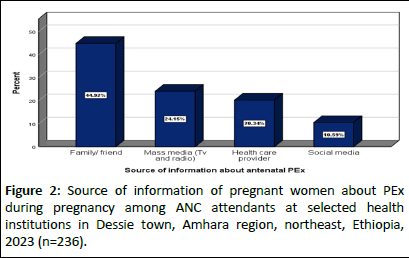
Figure 2: Source of information of pregnant women about PEx during pregnancy among ANC attendants at selected health institutions in Dessie town, Amhara region, northeast, Ethiopia, 2023 (n=236).
Pregnant women’s knowledge level towards benefits and contraindications of physical exercise during pregnancy
Regarding knowledge assessment questions about benefits of PEx during pregnancy 40.7%, 63.5%, 88.8%, 75.3% and 62.5% of the study participants knew that PEx during pregnancy can reduce the risk of excessive weight gain, strengthening pelvic floor muscles, prevent antenatal, postnatal depression, had benefit for general health and development of baby and better ability to cope with labor and delivery respectively. Regarding contraindications of PEx during pregnancy 56%, 59.7%, 100% and 54% of the study participants knew that chest pain, difficulty in breathing, vaginal bleeding and decreased fetus movement during pregnancy were contraindicated for doing PEx during pregnancy respectively (Table 5).
| Variables | Category | Frequency (n) | Percent (%) |
| Benefits | |||
| Reduces risk of back pain during pregnancy | I don’t now | 72 | 12 |
| No | 23 | 3.8 | |
| Yes | 505 | 84.2 | |
| Reduces the risk of gestational diabetes mellitus | I don’t now | 98 | 16.3 |
| No | 25 | 4.2 | |
| Yes | 477 | 79.5 | |
| Reduce risk of hypertension | I don’t now | 125 | 20.8 |
| No | 25 | 4.2 | |
| Yes | 450 | 75 | |
| More rapid post-natal recovery? | I don’t now | 199 | 33.2 |
| No | 5 | 0.8 | |
| Yes | 396 | 66 | |
| Contraindications | |||
| Poorly controlled gestational diabetes mellitus during pregnancy | I don’t now | 253 | 42.2 |
| No | 7 | 1.2 | |
| Yes | 340 | 56.6 | |
| Uncontrolled hypertension during pregnancy | I don’t now | 112 | 18.7 |
| No | 7 | 1.2 | |
| Yes | 481 | 80.1 | |
| Uterine contractions during pregnancy | I don’t now | 46 | 7.7 |
| No | 0 | 0 | |
| Yes | 554 | 92.3 | |
Table 5: Pregnant women’s knowledge level towards benefits and contraindications of PEx among ANC attendants at selected health institutions in Dessie town, Amhara region, Northeast Ethiopia, 2023 (n=600).
Out of 600 pregnant women, more than half (56.33%) of the study participants had overall good knowledge towards physical exercise during pregnancy, while the remaining 43.67% of study participants had overall poor knowledge towards physical exercise during pregnancy (Figure 3).

Figure 3: Pregnant women’s proportion of overall good and poor knowledge towards PEx during pregnancy among ANC attendants at selected health institutions in Dessie town, Amhara region, Northeast Ethiopia, 2023 (n=600).
Pregnant women’s attitude level towards physical exercise during pregnancy
Regarding attitude assessment questions towards PEx during pregnancy about 63.7% (382) of the study participants were agree that PEx during pregnancy is necessary. One third (33.8%) of the study participants strongly disagreed that PEx during pregnancy has risk to fetus. More than half (57%) of the study participants were agree that PEx during pregnancy should perform under the guidance of health care professional. Four hundred twenty-two (70.5%) of the study participants were agree that personally like doing PEx (Table 6).
| Variables | Strongly disagree | Disagree | Neutral | Agree | Strongly agree | |||||
| N | % | N | % | N | % | N | % | N | % | |
| Do you feel performing PEx during pregnancy is necessary? | 4 | 0.7 | 15 | 2.5 | 32 | 5.3 | 382 | 63.7 | 167 | 27.8 |
| Do you feel performing PEx during pregnancy has risky to the fetus? | 203 | 33.8 | 167 | 27.8 | 200 | 33.3 | 28 | 4.7 | 2 | 0.3 |
| Do you feel antenatal exercise suit with our culture? | 2 | 0.3 | 19 | 3.2 | 133 | 22.2 | 316 | 52.7 | 130 | 21.7 |
| Do you feel pregnant women should perform PEx under the guidance of health care professional? | 7 | 1.2 | 26 | 4.3 | 62 | 10.3 | 342 | 57 | 163 | 27.2 |
| Do you feel performing antenatal PEx can reduce pregnancy-related complications? | 0 | 0 | 42 | 7 | 204 | 34 | 240 | 43.3 | 94 | 15.7 |
| Do you feel practicing PEx during pregnancy helps in post-delivery recovery? | 1 | 0.2 | 35 | 5.8 | 230 | 38.3 | 255 | 42.5 | 79 | 13.3 |
| Do you feel PEx exercising will helps you get back to your shape? | 1 | 0.2 | 29 | 4.8 | 223 | 37.2 | 247 | 41.2 | 100 | 16.7 |
| Do you think regular PEx facilitates normal delivery? | 1 | 0.2 | 36 | 6 | 183 | 30.5 | 300 | 50 | 80 | 13.3 |
Table 6: Pregnant women’s attitude level towards PEx during pregnancy among ANC attendants at selected health institutions in Dessie town, Amhara region, northeast Ethiopia, 2023 (n=600).
Out of 600 pregnant women, around half (51.33%) of the study participants had overall favorable attitude towards physical exercise during pregnancy, while the remaining 48.5% of study participants had overall unfavorable attitude towards physical exercise during pregnancy (Figure 4).
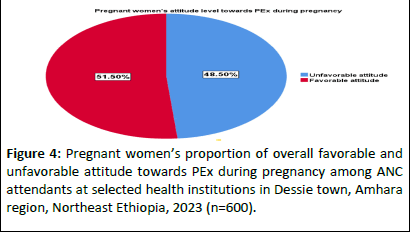
Figure 4: Pregnant women’s proportion of overall favorable and unfavorable attitude towards PEx during pregnancy among ANC attendants at selected health institutions in Dessie town, Amhara region, Northeast Ethiopia, 2023 (n=600).
Pregnant women’s practice of physical exercise during pregnancy
Regarding practice of PEx during pregnancy almost one-third (32.2%) of the study participants were practiced PEx in their current pregnancy. Among those who practiced PEx during pregnancy all 100% (n=193) of the study participants were practiced walking, followed by relaxation/breathing, pelvic loor muscle exercise, preparing for labor: squatting and pelvic tilts with value of 9.8%, 7.8% and 6.7% respectively. Eighty-three (43%), 36.5% and 20.7% of the study participants were advised by self, other person and health care provider respectively. Among those who practiced PEx during pregnancy, 21.8% and 54.9% of the study participants were practiced PEx with frequency of equal or more than three times per week and 30 or more minutes of duration of PEx during pregnancy per session, respectively (Table 7).
| Variables | Category | Frequency (n) | Percent (%) |
| Do you practice any type of PEx in current pregnancy (n=600) | Yes | 193 | 32.2 |
| No | 407 | 67.8 | |
| Who advised you to do PEx during pregnancy (n=193)? | Healthcare provider | 40 | 20.7 |
| Self | 83 | 43 | |
| Other person | 70 | 36.3 | |
| How many times per week you exercised (n=193)? | <3 times | 151 | 78.2 |
| ≥ 3 times | 42 | 21.8 | |
| For how many minute you exercised per session (n=193)? | <30 minutes | 87 | 45.1 |
| ≥ 30 minutes | 106 | 54.9 |
Table 7: Pregnant women’s practice of PEx during pregnancy among ANC attendants at selected health institutions in Dessie town, Ethiopia, 2023 (n=600).
The most common reasons for pregnant women’s didn’t practiced PEx during pregnancy were my health professional didn’t advised me to do exercise, lack of time and I don’t have information were 39.9%, 27.2% and 19.2% respectively (Table 8).
| Reasons (n=407)* | Frequency (n) | Percent (%) |
| Is afraid that it may be harmful for fetus | 27 | 6.7 |
| Lack of time | 110 | 27.2 |
| Lack of motivation | 39 | 9.6 |
| I don’t have information | 78 | 19.2 |
| Pregnancy discomfort | 8 | 2.0 |
| My health professional didn’t advised me to do exercise | 162 | 39.9 |
| I am not in good health | 4 | 1.0 |
| Because of cultural reason | 0 | 0.0 |
| Feel tired | 25 | 6.2 |
| Note: *Multiple response | ||
Table 8: Reasons for pregnant women’s didn’t practiced PEx during pregnancy (n=407).
Discussion
The present study aimed to assess pregnant women’s knowledge, attitude and practice towards Physical Exercise (PEx) during pregnancy among Antenatal Care (ANC) attendants at selected health institutions in Dessie town, Amhara region, northeast Ethiopia, in 2023.
Proportion of pregnant women’s knowledge towards physical exercise during pregnancy
This study found that 56.33% (95% CI: 52.35%-60.31%) of pregnant women had good knowledge towards benefits and contraindications of PEx during pregnancy. This finding aligns with studies conducted in Nigeria 52.4%, Bahir Dar, Ethiopia 55.8% and Pakistan 53.8%.
However, the current study's findings were lower than those from studies in Brazil 65.6% and India 66%. This discrepancy may be due to differences in educational levels, as many participants in the current study had only primary education and nearly twothirds had not heard about PEx during pregnancy.
Conversely, the findings were higher than those reported in Addis Ababa, Ethiopia 50.4%, Gonder, Ethiopia 39.5%, Arbaminch, Ethiopia 46.3%, Saudi Arabia 50.67%, Sirilanka 27.33%, Zambia 19% and Iraq 7%. Possible reasons for this higher results include socio-cultural differences, sample size, study population and the variety of health institutions surveyed. Increased awareness over time and a higher proportion of study participants with better educational backgrounds may also contribute to these differences. Additionally, urban residents might have more access to information about PEx during pregnancy through various media sources.
Proportion of pregnant women’s attitude towards physical exercise during pregnancy
This study revealed that 51.50% (95% CI: 47.49%-55.51%) of pregnant women had favorable attitude towards PEx during pregnancy. This finding was in line with study conducted in Gonder, Ethiopia 55.3%, Bahir Dar, Ethiopia 53.3% and Saudi Arabia 56.1%.
In contrast, the finding of this study was lower than the finding of previous study conducted in Pakistan 79%, Brazil 93.8%, Zambia 93% and Nigeria 84.2%. The possible explanations for the discrepancy might be due to that in Brazil and Nigeria, majority of their study participants had secondary and above educational level, heard about PEx during pregnancy and good knowledge about PEx during pregnancy. Additionally, the study noted in these countries that their study participant’s attitude level was assessed using a single questions.
Furthermore, the discrepancy may be due to that in Pakistan and Zambia, there were a higher proportion of study participants who had attended college and above educational level. In addition, majority of study participants in Zambia were counseled by doctors and midwifes about PEx during pregnancy. So, better education of the study participants and counseled by healthcare providers during ANC follow-up were important factors of pregnant women’s attitude towards PEx during pregnancy.
The finding of this study was higher than the study conducted in Addis Ababa, Ethiopia 27.9%, Arbaminch, Ethiopia 46% and Sirilanka 35.5%. This higher result may be due to the following reasons. First, it may be due to the influence of pregnant women’s knowledge towards PEx during pregnancy on pregnant women’s attitude towards PEx during pregnancy. So, good knowledge of study participants about PEx during pregnancy can change pregnant women’s misconceptions about PEx during pregnancy. Second, difference in time lag when the previous researches were conducted, currently awareness level of pregnant women is increasing might cause the discrepancy.
Third, it might be due to educational background and sociocultural differences as well as difference in study populations.
Proportion of pregnant women’s practice of physical exercise during pregnancy
According to the current study, 32.2% of pregnant women were practiced physical exercise (95% CI: 28.42%-35.91%) during their current pregnancy. This finding was in line with previous study conducted in Gondar, Ethiopia 30.9% and Brazil 29%.
However, the finding of the current study showed a lower rate of pregnant women’s practice of PEx during pregnancy compared with the previous study conducted in Turkey 67.1%, Pakistan 46.2% and Arbaminch, Ethiopia 62.7%. This disparity may be due to that their study participants had good knowledge, had habit of PEx before becoming pregnant and advised by health care providers to practice PEx during pregnancy.
On the other hand, the result of the current study with respect to pregnant women’s practice of PEx during current pregnancy was higher than study conducted in Addis Ababa, Ethiopia 22.3%, and Mekelle, Ethiopia 20.7%, India 18%, Saudi Arabia 18%, Sir Lanka 13.6% and South Africa 27.7%. This higher result in the present study may be due to the fact that, this study include study participants from both private and governmental health institutions, used larger sample size compared to other studies, had better good knowledge and better favorable attitude towards PEx during pregnancy.
Strength of the study
This study's strength lies in its focus on pregnant women in both governmental and private health institutions within the study area.
Limitations of the study
Firstly, there may be social desirability bias as the study utilized interview questions to gather data on the practice of PEx assessment. Additionally, there is a risk of recall bias as participants were asked to recall past experiences.
Conclusion
This study revealed that around half of pregnant women had good knowledge and favorable attitude towards PEx during pregnancy. However, almost one-third of pregnant women practiced PEx during their current pregnancy.
Recommendation
For antenatal care providers
Should advice pregnant women to strengthen ANC follow-up, giving special attention for those pregnant women with a history of abortion and encourage women to practice PEx before becoming pregnant.
Should provide health education and counseling regarding benefits and contraindications of PEx during pregnancy for pregnant women during ANC follow-up to improve their knowledge, attitude and practice towards PEx during pregnancy.
For minister of health
Create adequate awareness regarding PEx during pregnancy and its health benefits through the use of various media sources like television, radio and social media.
The country’s minister of health has better to design strategies to provide appropriate information about PEx during pregnancy by including it in the health education system.
For future researchers
Better to incorporate objective method for assessing practice of PEx during pregnancy such as pedometer.
Ethical Approval and Consent to Participate
Ethical approval and consent were obtained for this study. The ethical clearance letter was granted by the ethical review committee of Wollo University and oral informed consent was obtained from all participants. Information obtained from each study participants were kept confidential.
Consent for Publication
Not applicable.
Availability of Data and Materials
The dataset was used in this study is available from the corresponding author on reasonable request.
Competing Interests
The author declare no conflicts of interest related to this article.
Funding
Not applicable.
Authors’ Contributions
Conceptualization: Abdusellam Yimer
Data curation: Abdusellam Yimer, Mengistu Abate, Seada Endris, Alemtsehay Wossen, Bilal Mohammed, Ahmed Yesuf Ali, Alemu Guta, Aminu Mohammed Yasin and Yitagesu Sintayehu
Formal analysis: Abdusellam Yimer
Funding acquisition: Abdusellam Yimer, Mengistu, Seada Endris, Alemtsehay Wossen, Bilal Mohammed, Yitagesu Sintayehu, Alemu Guta, Aminu Mohammed Yasin and Ahmed Yesuf Ali
Investigation: Abdusellam Yimer, Mengistu, Seada Endris, Alemtsehay Wossen, Bilal Mohammed, Yitagesu Sintayehu, Alemu Guta, Aminu Mohammed Yasin and Ahmed Yesuf Ali
Methodology: Abdusellam Yimer, Mengistu Abate, Seada Endris, Alemtsehay Wossen, Bilal Mohammed and Ahmed Yesuf Ali
Project administration: Abdusellam Yimer, Mengistu Abate, Seada Endris, Alemtsehay Wossen, Bilal Mohammed, Yitagesu Sintayehu, Aminu Mohammed Yasin and Ahmed Yesuf Ali
Resources: Abdusellam Yimer, Mengistu Abate, Seada Endris, Alemtsehay Wossen, Bilal Mohammed, Ahmed Yesuf Ali, Alemu Guta, Aminu Mohammed Yasin and Yitagesu Sintayehu
Software: Abdusellam Yimer
Supervision: Abdusellam Yimer, Mengistu Abate, Seada Endris, Alemtsehay Wossen, Bilal Mohammed, Ahmed Yesuf Ali, Alemu Guta, Aminu Mohammed Yasin and Yitagesu Sintayehu
Validation: Abdusellam Yimer, Mengistu Abate, Seada Endris, Alemtsehay Wossen, Bilal Mohammed, Ahmed Yesuf Ali, Alemu Guta and Yitagesu Sintayehu
Visualization: Abdusellam Yimer, Mengistu Abate, Seada Endris, Alemtsehay Wossen, Bilal Mohammed, Ahmed Yesuf Ali, Alemu Guta, Aminu Mohammed Yasin and Yitagesu Sintayehu
Writing–Original draft: Abdusellam Yimer
Writing–Review and editing: Abdusellam Yimer, Mengistu Abate, Seada Endris, Alemtsehay Wossen, Bilal Mohammed, Ahmed Yesuf Ali, Yitagesu Sintayehu, Aminu Mohammed Yasin and Alemu Guta. All authors approved the final draft of manuscript.
Acknowledgments
We would like to thank Dessie town administration health department, directors and heads of maternity and child health wards of each hospitals and health centers for allowing this study to be conducted at their institutions and for their cooperation during the data collection period. Our sincere thank goes to all pregnant women for the valuable time they dedicated to participating, collaborating and willingness to take part in the study. We would also like to express my gratitude to data collectors and supervisor for their dedication and patience during the data collection period.
References
- Mottola MF, Davenport MH, Ruchat SM, Davies GA, Poitras VJ, et al. (2018) 2019 Canadian guideline for physical activity throughout pregnancy. Br J Sports Med 52:1339-1346
[Crossref] [Google Scholar] [PubMed]
- Artal R, Lockwood CJ, Fricker P, Barss VA (2017) Exercise during pregnancy and the postpartum period. Clin Obstet Gynecol 46:496-499
- Hjorth MF, Kloster S, Girma T, Faurholt-Jepsen D, Andersen G, et al. (2012) Level and intensity of objectively assessed physical activity among pregnant women from urban Ethiopia. BMC Pregnancy Childbirth 12:154
[Crossref] [Google Scholar] [PubMed]
- Sujindra E, Bupathy A, Suganya A, Praveena R (2015) Knowledge, attitude, and practice of exercise during pregnancy among antenatal mothers. Int J Educ Psychol Res 1:234-237
- Al-Youbi GM, Elsaid T (2020) Knowledge, attitude, and practices on exercise among pregnant females attending Al-Wazarat Health Center, Riyadh, Saudi Arabia. J Family Med Prim Care 9:3905-3915
[Crossref] [Google Scholar] [PubMed]
- Wijesiriwardana WS, Gunawardena NS (2016) Knowledge, attitudes and practices regarding antenatal exercises among pregnant mothers attending De Soyza Maternity Hospital Colombo. Sri Lanka J Obstet Gyn 37:65-71.
- Abdullah WH, Najib BM (2019) Knowledge and attitude of pregnant women towards antenatal exercise in Erbil City. Erbil J Nurs Midwifery 2:108-115
- Nkhata LA, Munalula-Nkandu E, Shula H (2014) The knowledge, attitudes and practices towards exercise among women attending antenatal care at the university teaching hospital in Lusaka, Zambia. J Sci Res Rep 3:1986-1992
- Beyene MM, Shimbre MS, Ukke GG, Gebremichael MA, Gurara MK (2022) Factors associated with antenatal exercise in Arba Minch town, Southern Ethiopia: A community-based cross-sectional study. PLoS One 17:e0260840
[Crossref] [Google Scholar] [PubMed]
- Negash S, Yusuf L, Gebru B (2022) Knowledge, attitude, and practice of pregnant mothers regarding exercise during pregnancy in mothers attending ANC at selected health facilities Addis Ababa, Ethiopia, 2021. J Gynecol Reprod Med 6:22-35
Open Access Journals
- Aquaculture & Veterinary Science
- Chemistry & Chemical Sciences
- Clinical Sciences
- Engineering
- General Science
- Genetics & Molecular Biology
- Health Care & Nursing
- Immunology & Microbiology
- Materials Science
- Mathematics & Physics
- Medical Sciences
- Neurology & Psychiatry
- Oncology & Cancer Science
- Pharmaceutical Sciences